

Business Valuation Service
What Is Your Business Worth?
Every business owner eventually faces this question—whether you're considering selling, planning for retirement, exploring partnership changes, or simply want to understand where you stand. The challenge is that determining the value of a business isn't as straightforward as checking a stock price or looking up comparable sales. Your company is unique, and its value depends on factors that generic formulas can't fully capture.
Our business valuation calculator provides a preliminary estimate based on the information you provide. It's a starting point—a way to get an initial sense of range before diving deeper. For decisions involving significant money or major life changes, you'll want a professional business valuation that accounts for the nuances that make your company different from every other business in your industry.
Free Company Valuation Calculator
Get a preliminary company valuation estimate in minutes
If your preliminary estimate raises questions about value, readiness, or timing, you can Schedule Your Confidential Consultation with Midwest Business Brokers before sharing detailed records.
What Your Business Valuation Estimate Requires
Generating a reliable preliminary valuation estimate starts with gathering consistent historical performance data. To build a solid baseline, business owners should compile current financial and operating records, such as federal tax returns, detailed profit and loss statements, and balance sheets, which an advisor may request to analyze performance trends.
From there, these raw figures must be normalized by identifying owner salary, personal expenditures run through the business, and non-recurring expenses. Understanding how Seller Discretionary Earnings are determined is essential, as this SDE calculation forms the operational cash flow foundation that buyers use to value small and mid-sized companies.
Company Valuation Calculator: How to Use a Preliminary Estimate
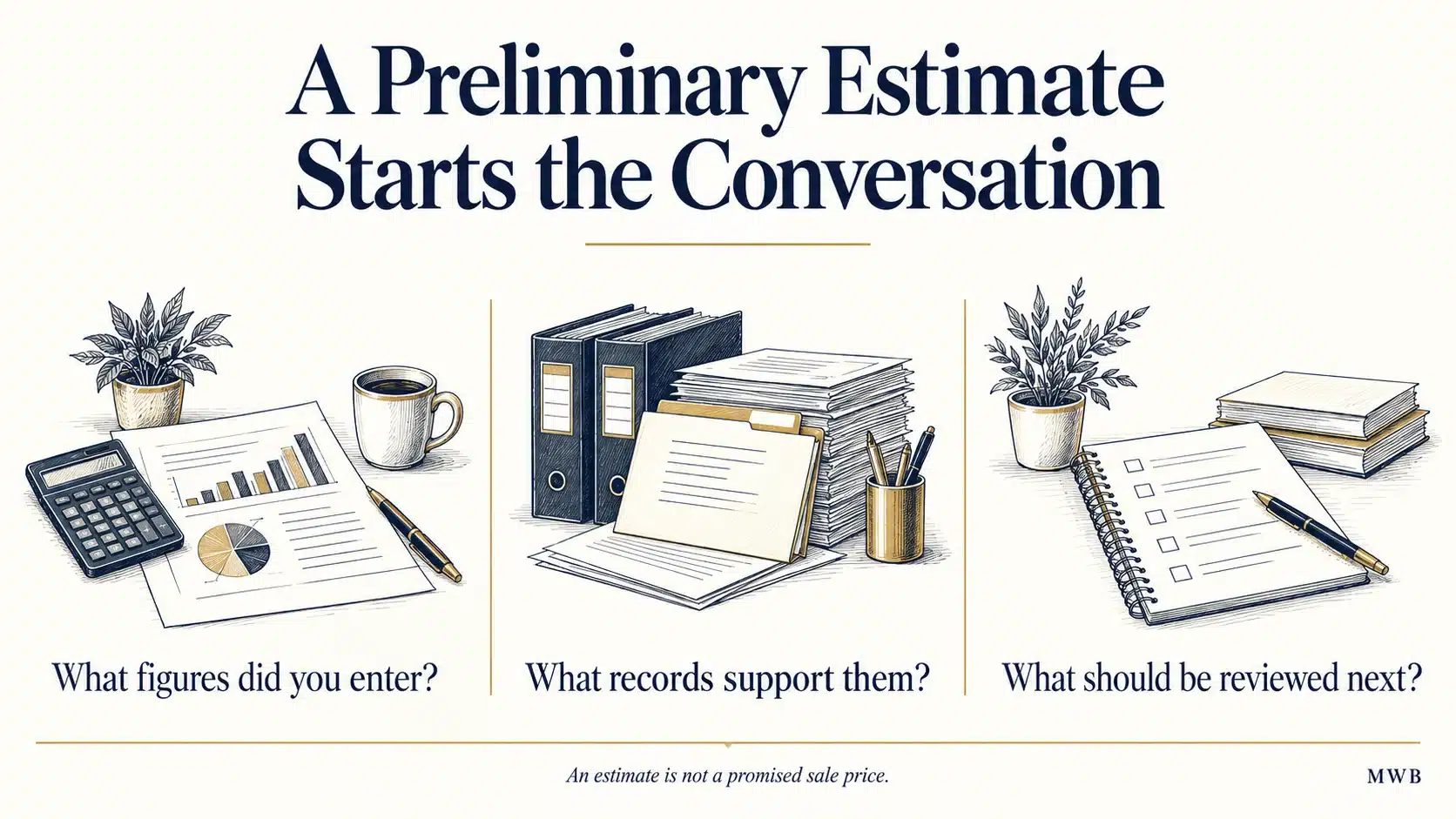
A company valuation calculator is a useful first screen when an owner wants to move beyond a rule-of-thumb answer. The estimate should start a focused conversation about the earnings a buyer may underwrite, the records that support those earnings, and the risks that can change a transaction. It is not a promised selling price, a tax valuation, or a substitute for a purpose-specific independent appraisal.
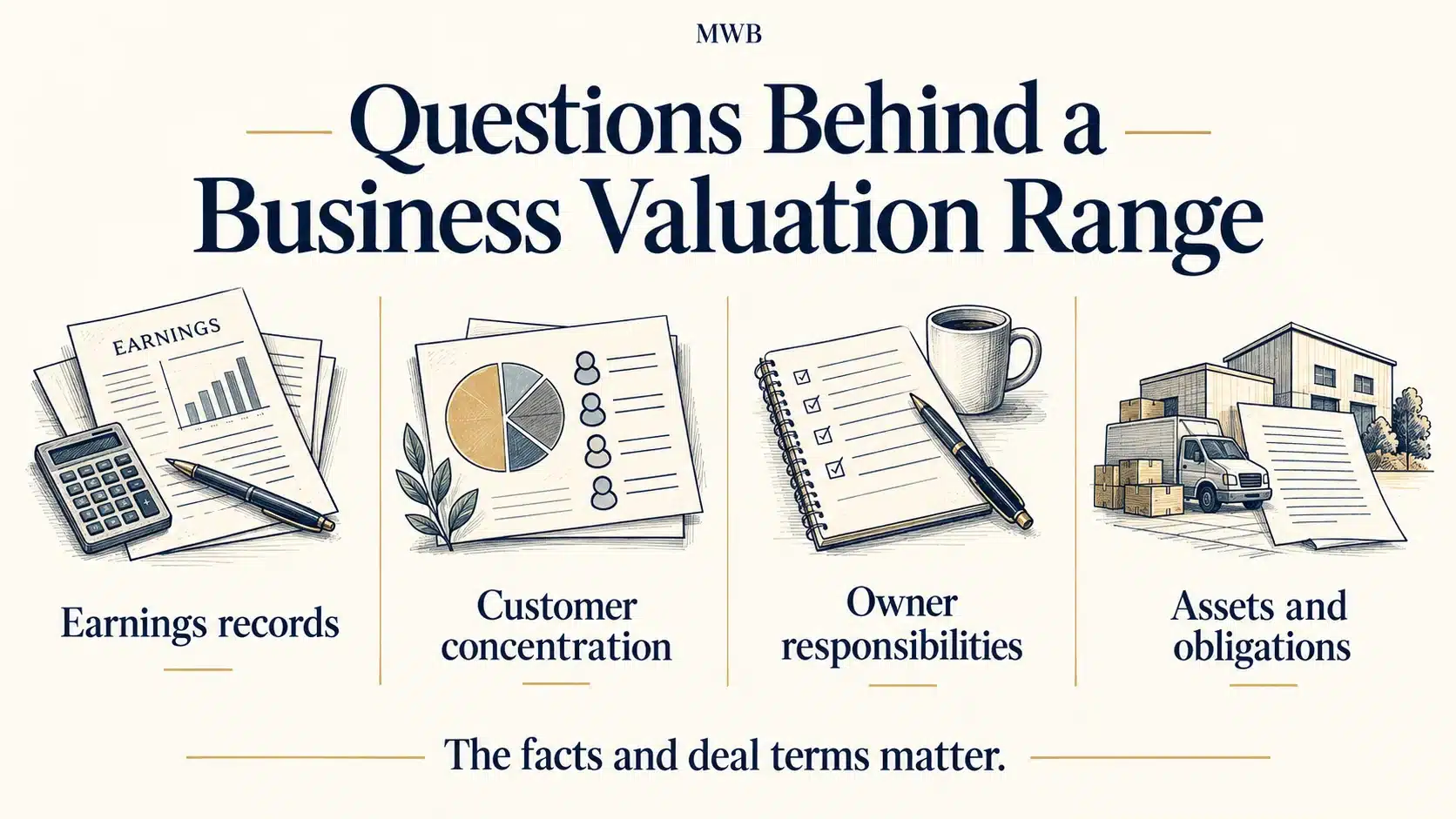
Use the calculator above to form a preliminary range from the information you enter. Then compare that starting point with the business realities that affect a buyer's decision: whether earnings can be documented, whether key customers and suppliers are transferable, how much depends on the current owner, what working capital or equipment a successor will need, and how the transaction would be structured.
What a Sale-Ready Company Valuation Review Examines
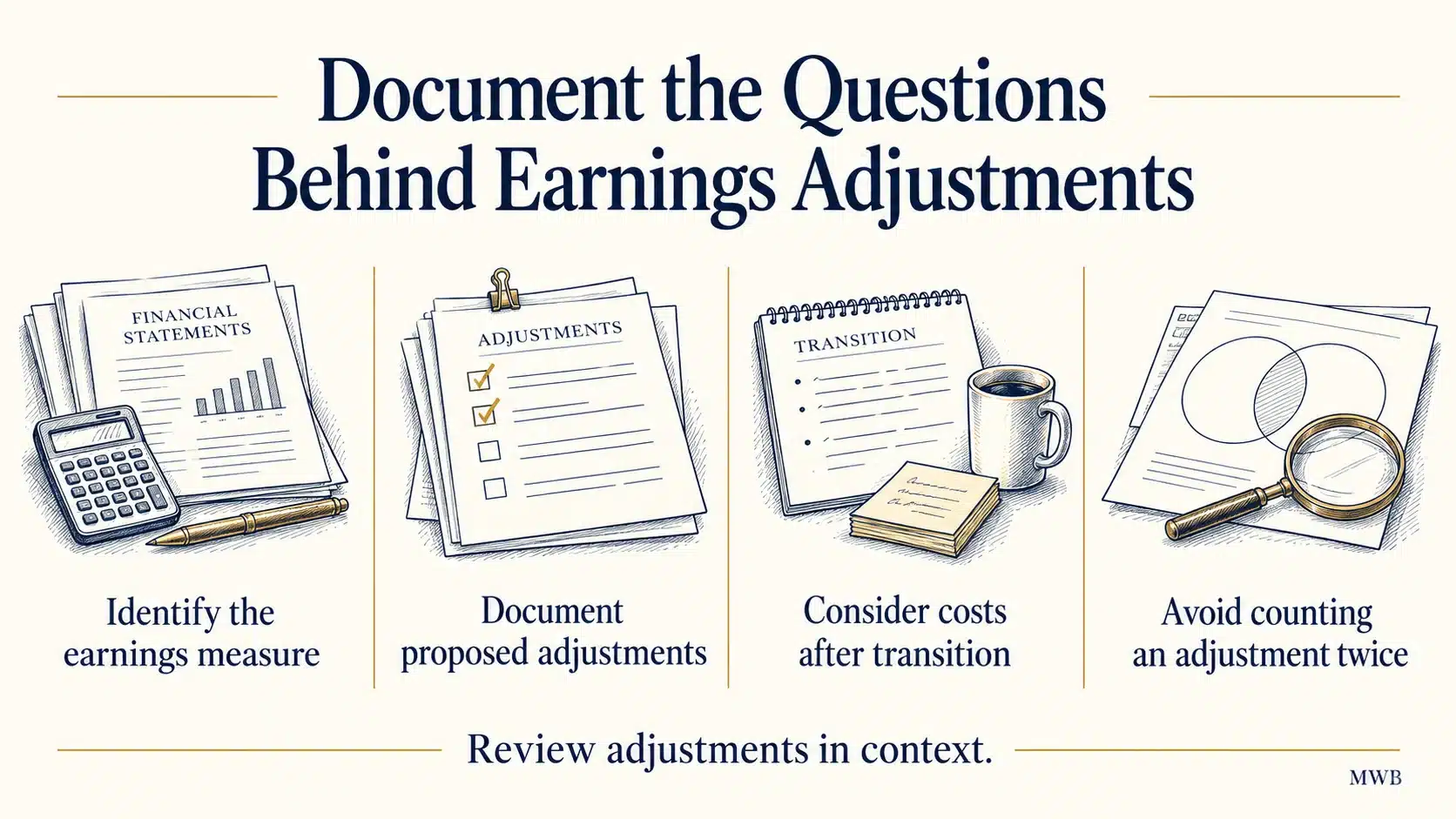
- Normalized earnings: A buyer needs to distinguish ongoing operating earnings from current-owner choices and genuinely non-recurring items. Our guide to Seller's Discretionary Earnings explains the questions behind that review.
- Buyer model and management depth: The appropriate earnings measure depends on the people and costs required to operate the company after a transition.
- Market and operating risk: Customer concentration, contract terms, supplier dependence, recurring revenue, capital needs, and record quality can change the discussion even when two companies report similar sales.
- Assets, liabilities, and deal terms: Inventory, equipment, working capital, debt, and the terms of a proposed transaction affect what an owner actually needs to evaluate.
How to Prepare Before You Rely on an Estimate
Collect the financial and operating records that explain the business rather than relying only on a recent revenue total. That normally includes historical tax returns, profit and loss statements, balance sheets, current year-to-date performance, an explanation of owner compensation and unusual expenses, and material customer, supplier, lease, or equipment information. The goal is not to force every company into one formula; it is to establish a record that can withstand follow-up questions.
Owners who are considering a sale can also review how to value a business for sale before deciding whether a more detailed review is warranted. For questions about scope and pricing, see business valuation cost in Indiana. Midwest Business Brokers focuses on confidential seller-side transactions with a minimum deal size of $1 million; a preliminary calculator estimate does not determine whether an engagement is appropriate.
Company Valuation Record Checklist
Before a confidential review, assemble the records that allow an advisor or buyer to understand the company without filling gaps with assumptions. Start with the most recent historical financial statements and tax returns, then add current performance, a concise explanation of material adjustments, and the records that explain how customers, staff, suppliers, facilities, equipment, and working capital affect the business. A well-organized record set does not guarantee a transaction outcome, but it gives an owner a stronger basis for evaluating the questions behind a preliminary estimate.
Company Valuation Calculator Frequently Asked Questions
How do I calculate my business valuation?
Start by defining why you need the valuation and gathering consistent financial and operating records. A preliminary calculation normally considers normalized earnings such as Seller Discretionary Earnings or another appropriate earnings measure, then tests those earnings against customer concentration, recurring revenue, owner dependence, management depth, assets, debt, working capital, contracts, market conditions and the intended transaction structure. An online calculator can provide a starting range, but it cannot determine a final sale price or replace a purpose-specific appraisal. If you are considering a sale, use the estimate to identify the records and questions for a confidential seller-side conversation, even if your value or timing is not yet certain.
Can a company valuation calculator determine my final selling price?
No. A calculator can provide a preliminary range from the information entered, but a final transaction discussion depends on verified earnings, buyer requirements, risk, assets and liabilities, working capital, and deal structure.
What is the difference between company valuation and a formal independent appraisal?
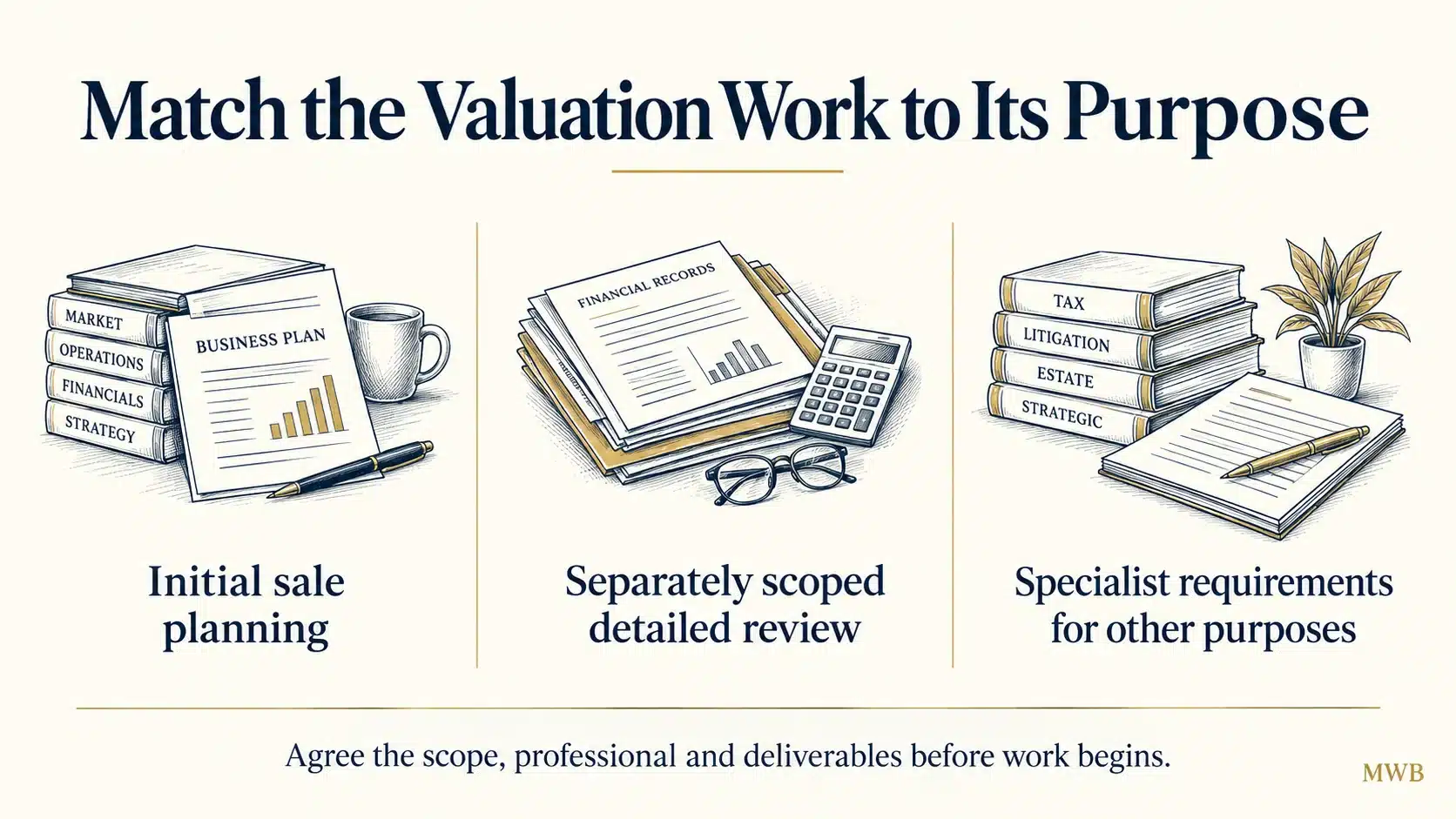
A sale-planning valuation discussion helps an owner understand a potential market range and the issues buyers may examine. Tax, estate, litigation, shareholder, financing, or other formal uses can require a valuation prepared for that specific purpose by an appropriately qualified professional.
Why can companies with similar revenue have different values?
Revenue does not show the costs, earnings quality, customer relationships, management depth, capital needs, or risks required to keep the company operating after a transition. Those details can materially change a buyer's view of value.
What should I do after receiving a preliminary estimate?
Use it to organize the financial and operating records behind the business, identify questions that need support, and decide whether a confidential seller-side conversation is the next appropriate step.
Key Drivers That Change Business Value
Two companies in the same industry with identical annual revenues can sell for vastly different prices. Buyers look beyond top-line revenue to assess risk and transferability. Value is heavily influenced by customer concentration (relying on a few key clients increases risk), recurring revenue structures, and owner dependence. A business that requires the owner's constant daily oversight will face downward pressure on valuation multiples.
To assess how buyers will evaluate your business, advisors apply industry-specific valuation multiples to normalized earnings. Understanding these drivers allows you to systematically strengthen your operations, document workflows, and reduce dependencies before initiating a sale. If you are planning an exit in the next few years, you can read our comprehensive guide on determining what your company is worth in Indiana to map your pre-sale improvement strategy.
Why Business Valuation Matters
Understanding what your company is worth isn't just an academic exercise. The number affects real decisions with real consequences.
If you are considering selling, a preliminary valuation is one input to planning, not a retirement decision by itself. Ask how a potential price relates to debt, transaction costs, taxes, payment terms and your personal needs. Discuss those questions with the appropriate financial, tax and legal professionals before relying on expected proceeds.
Beyond selling, business owners seek valuations for partnership buyouts, divorce proceedings, estate planning, bringing on investors, obtaining financing, and strategic planning. Each situation requires understanding not just what your business might sell for today, but what drives that value and how it might change under different circumstances.
The stakes are too high for guesswork. Yet many business owners operate for years—sometimes decades—without ever obtaining a professional assessment of what they've built.
How We Determine Business Value
Valuing a company requires analyzing multiple factors and often applying several methodologies to arrive at a defensible conclusion. The approaches we use depend on your business type, size, industry, and the purpose of the valuation.
Income-Based Approaches
Most small and mid-size businesses sell based on their earning power. The fundamental question buyers ask is: "What return will I get on my investment?" Income-based valuation methods answer this by analyzing your business's cash flow and applying appropriate multiples.
For smaller businesses, we typically focus on Seller's Discretionary Earnings (SDE)—essentially, the total financial benefit the business provides to a working owner. This includes net profit plus owner salary, benefits, and various add-backs for expenses that wouldn't continue under new ownership.
For larger businesses or those with professional management, EBITDA (Earnings Before Interest, Taxes, Depreciation, and Amortization) often serves as the earnings measure. EBITDA business valuation removes the effects of financing decisions and accounting practices to focus on operational performance.
The multiple applied to these earnings varies significantly by industry, size, growth trajectory, and risk factors. A business generating $300,000 in annual earnings might be worth $750,000 in one industry and $1.2 million in another, depending on these variables.
Market-Based Approaches
Just as real estate appraisers look at comparable sales, business appraisers examine transactions involving similar companies. This market approach provides reality checks on income-based conclusions and helps ensure valuations reflect what buyers actually pay in the current environment.
When comparable transactions are used, ask which sources are available, how recent the records are, and how differences in size, location and deal structure are addressed. A reference multiple alone does not establish what your business will sell for.
Asset-Based Approaches
Some businesses—particularly those with significant equipment, inventory, or real estate—warrant analysis of underlying asset values. An asset-based review considers the assets and liabilities relevant to its purpose. It is not a guaranteed minimum sale price: realizable proceeds depend on the assets, obligations, costs and circumstances of the transaction.
What Affects Your Business Value?
Two businesses with identical revenue can have dramatically different valuations. Understanding the factors that drive value helps you make better decisions—whether you're preparing to sell or simply want to build a more valuable company over time.
Financial Performance
Consistent, growing profitability commands premium valuations. Buyers pay more for businesses with documented track records, clean financial statements, and positive trends. Businesses with volatile earnings, declining revenue, or messy financials face discounts—sometimes severe ones.
The quality of your earnings matters as much as the quantity. Recurring revenue from long-term contracts or repeat customers is worth more than equivalent revenue from one-time transactions. Diversified customer bases are worth more than businesses dependent on a few large accounts.
Owner Dependence
How much does the business rely on you personally? If customers buy because of your relationships, employees perform because of your oversight, and operations run because of your daily involvement, buyers see risk. They're not just buying a business—they're buying a job, and they're worried about what happens when you leave.
Businesses that can operate successfully without the owner's constant involvement command higher multiples. Documented systems, capable management teams, and transferable customer relationships all reduce risk and increase value.
Industry and Market Position
Some industries simply command higher valuations than others. Businesses in growing sectors with favorable long-term trends attract more buyer interest and competitive bidding. Businesses in declining industries or those facing technological disruption face headwinds regardless of current performance.
Within your industry, market position matters. Businesses with strong brands, competitive advantages, barriers to entry, or dominant local positions are worth more than commodity competitors.
Growth Potential
Buyers don't just purchase current cash flow—they purchase future potential. Businesses with clear growth opportunities, untapped markets, or scalable models command premium valuations. Mature businesses with limited upside may be valued more conservatively, even with strong current performance.
Why Professional Valuation Matters
Online calculators and rule-of-thumb multiples provide rough estimates, but they miss the nuances that determine actual value. A free business valuation calculator applies assumptions to the figures you enter; its reference multiples are not verified comparable sales for your particular company. It can't tell you whether your business should be at the high end, low end, or somewhere outside that range entirely.
Professional business valuation goes deeper. It examines your specific financial statements, adjusts for non-recurring items and owner-related expenses, analyzes your customer concentration and competitive position, evaluates your management team and operational systems, and compares your business to actual completed transactions. The result is a defensible value conclusion based on your unique circumstances—not generic averages.
For transactions involving significant money, professional valuations also provide credibility. Buyers, lenders, attorneys, and tax authorities give more weight to valuations prepared by qualified professionals than to estimates from online tools or back-of-napkin calculations.
Our Approach to Business Valuation
Midwest Business Brokers serves owners from Fort Wayne and focuses on potential seller-side transactions of $1 million or more. An initial conversation can establish your goals, the information available and whether further advisory work is appropriate. If you are unsure of your value or timing, you can still ask for a conversation.
Our valuation process begins with understanding your situation. Why do you need to know your business value? Are you planning to sell in the near term, preparing for eventual transition, dealing with partnership issues, or gathering information for estate planning? The purpose shapes our approach and the level of detail required.
Before any additional work begins, agree on its purpose, the records required, who will perform it, the fee and the deliverables. Discuss how sensitive records should be shared before sending detailed customer, employee or financial documents. The free calculator and initial consultation do not promise a formal appraisal or a particular sale price.
When You Need a Business Valuation
Selling Your Business
If you're considering selling, understanding your business value is essential before going to market. You need to know whether your expectations are realistic, whether the proceeds will meet your financial needs, and how to position your business to maximize value.
A professional valuation also helps you identify opportunities to increase value before selling. Sometimes waiting 12-18 months while addressing specific issues can add significantly more value than the additional time costs. Other times, current market conditions favor selling sooner rather than later.
Partnership Transitions
When partners separate—whether through planned retirement, unexpected circumstances, or strategic decisions—valuation becomes critical. Buy-sell agreements often reference "fair market value" without defining how it's determined, leading to disputes when the time comes to execute.
For a partnership transition, agree on the intended use, valuation date, applicable agreement and professional qualifications before commissioning work. A valuation does not by itself resolve a disagreement or replace legal advice about the agreement.
Divorce and Estate Situations
A divorce or estate matter is different from initial sale planning. Ask your attorney or tax adviser what purpose-specific valuation and professional qualifications are required. Do not rely on this calculator as a valuation for that purpose.
Strategic Planning
Even if you're not planning any immediate transactions, periodic valuation provides valuable perspective. Understanding your business value—and what drives it—helps you make better strategic decisions, identify improvement opportunities, and track progress toward your goals.
Business Valuation Cost
The calculator and initial consultation are free. Additional valuation or advisory work should be separately scoped, with fees and deliverables agreed before it begins. The appropriate provider and work depend on the intended use; a sale-planning discussion is not the same as a formal appraisal for another purpose.
For an owner considering a sale, an initial discussion can help separate questions about a potential market range from the work needed to prepare for a transaction. Confirm the scope of any brokerage engagement before proceeding.
Start With a Conversation
Start with your goals, a high-level description of the business and the questions you want to resolve. You do not need a completed appraisal or a firm sale date to request a free initial consultation. Agree how sensitive records will be handled before sharing detailed documents.
Use the calculator above for an immediate preliminary estimate, or contact us directly to schedule a conversation about your specific circumstances.
Your business represents years of work, sacrifice, and achievement. Understanding its value is the first step toward maximizing the return on everything you've invested.
For general federal tax context, the Internal Revenue Service explains how a business sale is treated as a transfer of individual assets and how consideration may be allocated among them. This is general information, not tax advice; a CPA or attorney should confirm the treatment for a specific transaction.
When an Independent Valuation May Be Appropriate
While an online calculator or a broker opinion can help with initial exit planning, certain situations may benefit from or call for a formal, independent valuation. Particular tax, estate, partner, legal, or financing situations may warrant an independent valuation prepared for that specific purpose. Business owners should confirm any requirement with their lender and qualified legal, tax, or valuation professional.
For federal tax purposes, IRS Revenue Ruling 59-60 provides a framework of factors often considered when valuing closely held businesses. In SBA 7(a) ownership-change financing, the lender's current documentation distinguishes between internal and independent valuation paths based on transaction circumstances, including calculated business value and a close buyer-seller relationship. For details on appraisal costs and service structures, see our breakdown of the fees associated with valuation services.
Your Next Confidential Conversation
Every business owner's journey eventually leads to an exit. Understanding your starting point allows you to make informed strategic decisions. When you are ready to explore your options, a private discussion with Midwest Business Brokers provides clear, professional perspective on what your business can achieve in the market.
Midwest Business Brokers specializes in confidential transactions for companies with a minimum deal size of $1 million, focusing primarily on businesses valued between $2 million and $7 million. To ensure our goals are fully aligned with your success, our commissions are structured using the Double Lehman scale rather than a flat fee: 10% on the first $1 million, 8% on the second $1 million, 6% on the third $1 million, 4% on the fourth $1 million, and 2% on amounts exceeding $4 million.
If you are considering a sale, even if you are unsure of your value or timing, you can schedule a confidential consultation with our brokerage team to discuss your preliminary estimate and begin planning your exit.
 English
  Español de México
  简体中文
简体中文