
Sell Your Business for Maximum Value
Considering a business sale? Start by discussing your goals, timeline, and questions, even if your sale date or business value is not yet known.
The online calculator provides only a preliminary estimate from the details entered; it is not a buyer offer, appraisal, or final valuation.
Business Brokerage & Advisory: Business Sale Planning | Transaction Questions | Owner Priorities


Selling a Business? Here's What You Need to Know
Planning a business sale can start with questions about the owner's goals, timing, and available information. An initial conversation is a place to discuss those questions and possible next steps.
When business owners decide to sell, they're often unprepared for what lies ahead. The business sale process is complex, time-consuming, and filled with potential pitfalls that can cost you hundreds of thousands of dollars.
Here's the reality: Most business owners only sell once in their lifetime.
We do this every day.
💼 Planning Your Exit
Selling a business starts long before you list it. Strategic exit planning, accurate business valuation, and proper financial documentation determine whether you maximize value or leave money on the table.
📊 Business Valuation Matters
What's your business really worth? Professional valuation considers cash flow, assets, market position, and industry trends. Free online calculators can't capture what drives true value.
🎯 Finding Qualified Buyers
The right buyer pays premium prices and closes deals. We pre-qualify financial capacity, industry experience, and serious intent—protecting you from tire-kickers who waste months of your time.
🤝 Negotiating the Best Terms
Sale price is just one piece. Payment structure, seller financing, earnouts, non-compete agreements, and transition support all impact what you actually take home. Expert negotiation protects your interests.
🔒 Maintaining Confidentiality
Premature disclosure destroys value. When employees, customers, or competitors learn your business is for sale, operations suffer. We market discreetly while maintaining business continuity.
⚡ Closing Successfully
From letter of intent through final closing, dozens of details require coordination. Due diligence, legal documentation, financing approval, and transition planning—we manage every step.
A business sale can involve financial and operating records, ownership goals, confidential communication, buyer questions, negotiated terms, and transition planning. Which tasks a broker handles depends on the business and the written engagement. Preparation or professional assistance cannot guarantee a buyer, price, or closing date.
Ready to explore your options?
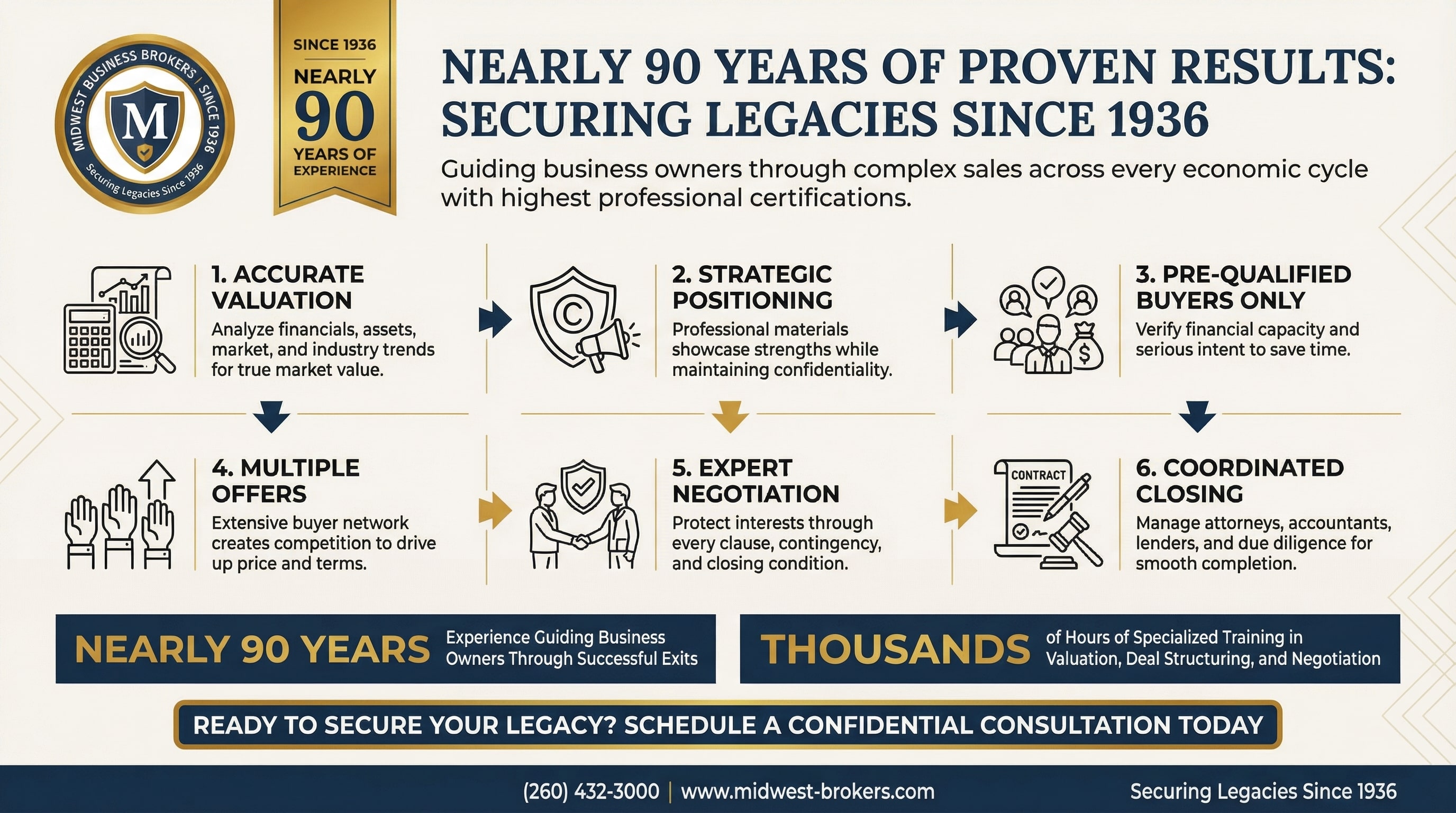
When you're ready to sell your business, choosing the right business broker determines whether you achieve a premium exit or settle for less than market value. We don't just list your business—we position it strategically, attract serious buyers, and negotiate aggressively on your behalf.
Questions to Discuss Before Engaging a Broker
A business sale can involve financial and operating records, ownership goals, confidential communication, buyer questions, negotiated terms, and transition planning. Which tasks a broker handles depends on the business and the written engagement.
The online calculator provides a preliminary estimate from the information entered; it does not establish a buyer's offer or replace a formal appraisal. Before engaging anyone for further valuation or advisory work, confirm its purpose, scope, fees, and deliverables.
Before sharing sensitive business information, ask what information may be shared at each stage, what written protections are used, how prospective buyers are screened, and who will handle communication. The agreed engagement should define responsibilities; practical safeguards depend on the situation.
A business transaction may raise legal, tax, accounting, or lending questions. Owners can consult qualified professionals of their choosing about those issues.
Why Business Owners Choose Us to Sell Their Business
Before choosing representation, ask which tasks are included, who is responsible for organizing records and handling inquiries, and how confidentiality will be addressed in the written engagement.
Questions to Clarify Before Engaging:
Topics to Discuss Before a Business Sale
1. Goals & Timing
Use an initial conversation to discuss your goals, timing, and questions.
2. Preliminary Estimate
The online calculator provides an estimate from information entered; it does not establish a buyer's offer or replace a formal appraisal. Before engaging anyone for further valuation or advisory work, confirm its purpose, scope, fees, and deliverables.
3. Confidentiality
Before sharing sensitive information, ask what may be shared at each stage, what written protections are used, and who will handle communication. Safeguards depend on the situation and written engagement.
4. Buyer Inquiries & Offers
Ask how inquiries and offers would be handled and which responsibilities are included in a proposed engagement.
5. Negotiation & Decisions
Clarify what assistance is included and which decisions remain yours.
6. Due Diligence & Outside Advisers
A sale may involve information requests and legal, tax, or accounting questions. Confirm roles with the broker and advisers you choose.
💡 The Business Sale Planning Advantage
A rushed process can leave less time to organize records and evaluate options. The effect on a transaction depends on the business, buyer interest, available information, and negotiated terms.
Starting early gives an owner more time to organize information, clarify priorities, and identify questions for advisers. It does not guarantee a buyer, sale price, or closing date.
Use the online calculator for a preliminary estimate or schedule an initial consultation. The calculator is not a buyer offer or formal appraisal. Before engaging anyone for further valuation or advisory work, confirm its scope, fees, and deliverables.
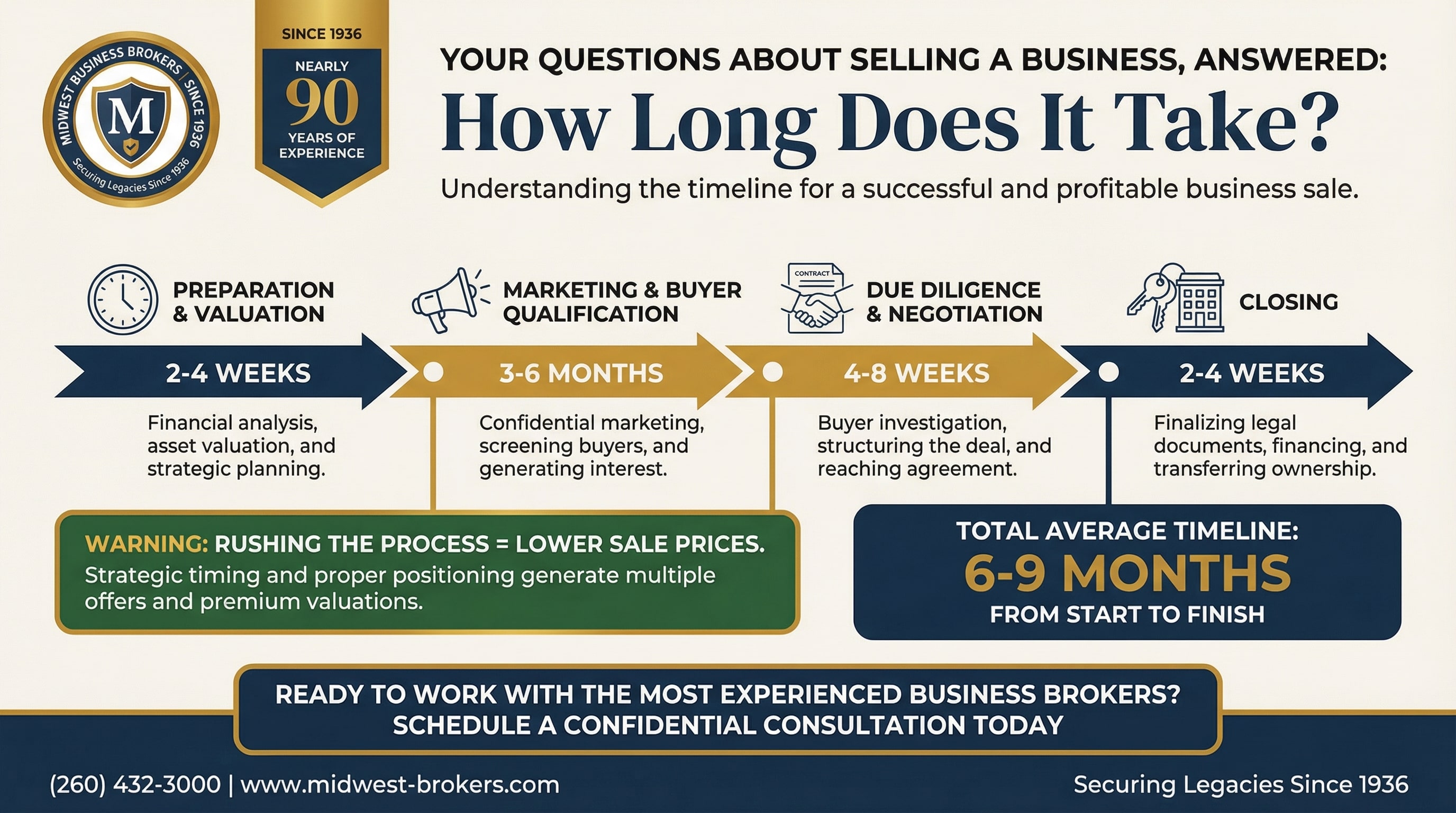
Your Questions About Selling a Business, Answered
Business owners considering a sale have legitimate concerns. Here's what you need to know before you put your business on the market.
How Long Does It Take to Sell a Business?
The timeline for selling a business varies significantly based on your industry, size, asking price, and market conditions. Typically:
- Preparation & Valuation: 2-4 weeks
- Marketing & Buyer Qualification: 3-6 months
- Due Diligence & Negotiation: 4-8 weeks
- Closing: 2-4 weeks
Total average: 6-9 months from start to finish.
Timing and proceeds vary with the business, available records, buyer interest, financing, due diligence, transaction structure, costs, and other circumstances. Use an initial conversation to identify questions and dependencies rather than rely on a fixed schedule or predicted result.
What Is My Business Actually Worth?
Business valuation isn't guesswork—it's based on proven methodologies:
Cash Flow Analysis: Your adjusted EBITDA (earnings before interest, taxes, depreciation, and amortization) forms the foundation. We add back owner salary, benefits, personal expenses run through the business, and one-time costs.
Industry Multiples: Different industries command different valuation multiples based on risk, growth potential, and market conditions.
Asset Value: Equipment, inventory, real estate, intellectual property, and customer contracts all contribute to total value.
Market Conditions: Current buyer demand, available financing, and economic trends impact what buyers will actually pay.
The online calculator provides a preliminary estimate based on the figures you enter. If you need a formal valuation, comprehensive analysis, or appraisal, discuss its purpose, scope, fees, and deliverables with the proposed provider before engaging them.
Can I Sell My Business Confidentially?
Absolutely—and you must.
Confidentiality isn't optional when selling a business. Premature disclosure causes:
- Employee anxiety leading to key staff departures
- Customer uncertainty driving them to competitors
- Vendor concerns resulting in changed credit terms
- Competitor interference attempting to disrupt your sale
Confidentiality Questions:
Before sharing sensitive business information, ask what information may be shared at each stage, what written protections are used, how prospective buyers are screened, and who will handle communication. The agreed engagement should define responsibilities; practical safeguards depend on the situation.
Should I Use a Business Broker or Sell It Myself?
A business sale may involve records, operating priorities, buyer questions, confidentiality, and transaction terms. Which tasks a broker handles depends on the business and the written engagement.
Questions to Consider When Evaluating Representation:
- How might the process fit with day-to-day business operations?
- Who would handle prospective-buyer communications?
- What records may be requested, and how would disclosures be addressed?
- Which questions should go to legal, tax, or accounting advisers?
Why? Because selling a business requires:
- Accurate valuation expertise
- Access to qualified buyer networks
- Professional marketing that maintains confidentiality
- Negotiation skills that protect your interests
- Transaction management through complex legal and financial processes
What About Seller Financing?
Evaluating Seller Financing Options
Whether seller financing is considered, and how it affects buyer interest or deal terms, depends on the business, buyer, financing sources, and negotiated transaction. Discuss the options with qualified transaction and lending professionals.
Questions to Discuss with Qualified Advisers:
- What terms are proposed, and what repayment questions should be clarified?
- Would any security or guarantees be part of the proposed terms?
- What risks and alternatives should the seller evaluate?
- Which tax questions should be discussed with a CPA?
We structure seller financing to protect you:
- Adequate down payment ensures buyer commitment
- Personal guarantees and collateral secure the note
- Reasonable terms that buyers can actually afford
- Legal documentation that protects your interests
How Do I Prepare My Business for Sale?
Start preparing now, even if you're years away from selling.
Financial Documentation:
- Three years of profit and loss statements
- Tax returns for the business
- Current balance sheet
- Clean, organized books that tell your story accurately
Operational Readiness:
- Document all processes and procedures
- Reduce owner dependency
- Resolve any pending legal or compliance issues
- Maintain equipment and facilities
- Lock in key employees and customer contracts
Value Enhancement:
- Improve profitability trends
- Diversify customer concentration
- Clean up balance sheet
- Update technology and systems
Preparation helps organize information and clarify priorities, though it cannot guarantee a buyer, sale price, or closing timeline.
Ready to Discuss Your Business Sale?
5 Costly Mistakes Business Owners Make When Selling
Avoid these common errors that cost sellers hundreds of thousands of dollars and months of wasted time.
A business transition may raise financial, legal, accounting, tax, and operating questions. Owners can list open questions and discuss them with advisers they choose before deciding what to do.
MISTAKE #1: Overpricing Your Business
The Problem:
Many business owners believe their business is worth far more than market value will support. Emotional attachment, years of hard work, and "what I need to retire" thinking lead to unrealistic asking prices.
The Cost:
Overpriced businesses sit on the market for months, becoming "stale listings" that serious buyers pass over. When you finally reduce the price, buyers wonder what's wrong—and negotiate even harder for discounts.
The Solution:
The online calculator provides a preliminary estimate from the figures entered. It does not establish a buyer's offer, promise a sale price, or replace a formal appraisal. Before engaging anyone for further valuation or advisory work, confirm its purpose, scope, fees, and deliverables.
MISTAKE #2: Poor Financial Documentation
The Problem:
Disorganized books, missing records, unexplained expenses, and "I run a lot of cash through the business" stories destroy buyer confidence. If you can't prove your numbers, buyers won't pay for them.
The Cost:
Financial and operating records may be part of a buyer's or lender's review, and requests vary by transaction. Organizing available records can help an owner respond to questions; it does not guarantee financing, an offer, or a timeline.
The Solution:
Three years of clean, consistent financial statements. Professional bookkeeping. Tax returns that match your story. Add-back documentation for owner salary, benefits, and discretionary expenses that demonstrates true cash flow.
MISTAKE #3: Not Maintaining Confidentiality
The Problem:
Business owners casually mention to employees they're "thinking about selling someday" or discuss plans with customers. Word spreads quickly, and damage occurs immediately.
The Cost:
- Key employees start job hunting
- Customers delay orders or switch to competitors
- Vendors tighten credit terms
- Sales decline during the sale process, reducing value
- Deals fall through, and you're left with a damaged business
The Solution:
Professional confidential marketing through experienced business brokers. Non-disclosure agreements before sharing identifying information. Controlled disclosure only to pre-qualified, serious buyers.
MISTAKE #4: Ignoring Buyer Financing Reality
The Problem:
Whether seller financing is considered, and how it affects buyer interest or deal terms, depends on the business, buyer, financing sources, and negotiated transaction. Review possible terms and risks with qualified transaction and lending professionals, and discuss tax questions with a CPA.
Questions to Discuss:
Before deciding, clarify any proposed amount, repayment terms, security, and responsibilities with the professionals you choose. No particular structure guarantees a buyer or price.
The Solution:
Structured seller financing with proper down payments (typically 30-40%), personal guarantees, and collateral protection. This expands your buyer pool while often resulting in higher total sale prices. Work with advisors who structure notes that protect your interests.
MISTAKE #5: Trying to Sell It Yourself
The Problem:
Business owners believe they can save the broker commission by selling themselves. They underestimate the complexity, time commitment, and specialized expertise required.
The Cost:
- What services are included, and who is responsible for each task?
- What fee triggers, expenses, and responsibilities would be stated in writing?
- How would confidential information and prospective-buyer communications be handled?
- Which transaction questions should be discussed with independent legal, tax, accounting, or lending advisers?
Review the Written Scope and Financial Terms
Compare the proposed services, responsibilities, fees, and expenses with your needs before deciding whether to engage a broker. No representation or preparation guarantees a buyer, sale price, or closing timeline.
Plan With Clear Expectations
A business sale may involve records, pricing questions, confidentiality, transaction terms, and adviser roles. The tasks and timing depend on the business and any written engagement.
Before moving forward, identify the records, questions, and decisions relevant to your situation and discuss them with advisers you choose.
Preparation or professional assistance cannot guarantee a buyer, sale price, or closing timeline.
Discuss Your Business Sale Options
Schedule an initial consultation to discuss your transition goals, timing, and questions.
Business owners may want input from legal, tax, accounting, or lending professionals, depending on the transaction. Ask what a broker's written engagement covers and which responsibilities remain with you and your chosen advisers.

What Business Owners Say About Working With Us
Don't just take our word for it. Here's what business owners experienced when they trusted us to sell their business.
For nearly 90 years, business owners have relied on our expertise to achieve successful exits. While we maintain strict confidentiality during active sales, many clients have graciously shared their experiences after closing.
"Professional, Thorough, and Results-Driven"
"We interviewed many different brokers and investment bankers before utilizing the services of Midwest Business Brokers. Everyone at MBB is a pleasure to work with and provided a tremendous liaison between seller and buyer. Most of all, Midwest Business Brokers, through its extensive network of acquisition-minded companies, had only financially qualified buyers with genuine interest tour our facility."
— Business Owner, Manufacturing Company
"They Know How to Close Deals"
"Many thanks to you and Mike McCarthy on a job well done! Without your expertise my acquisition would never have closed. Mike patiently worked with me until he found just the right fit. He reviewed my business plan and assisted in gathering all necessary information. Then, he referred me to a willing SBA lender and a capable equity investor. I have bought and sold several businesses over the past 16 years and have never been better served."
— Chris Cage Caggiano, President, DRSI, Inc.
"They Changed Our Lives"
"Dora Itkin dramatically changed our lives. Thanks to Dora who patiently and persistently worked with us and the former owner to put a deal together that was a win-win for both sides. No bridges were burned and the former owner has become one of our many loyal customers."
— Business Owners, Marine Industry
A business sale may involve different tasks and adviser roles. Review the proposed scope and responsibilities before deciding whether to proceed.
Questions to Ask When Evaluating a Business Broker
When evaluating a proposed engagement, consider asking about:
✓ Estimate Scope: What information and assumptions are used, and what does an estimate not establish?
✓ Marketing & Confidentiality: What information may be shared at each stage, and what written protections are used?
✓ Buyer Inquiries: How are prospective-buyer questions handled, and who is responsible?
✓ Transaction Roles: Which tasks are included, and which remain with you or your advisers?
✓ Written Engagement Terms: What is the scope of work, how are fees triggered, and what expenses may apply?
Review proposed engagement terms carefully before deciding whether to proceed.
Ready to Take the First Step?
Start by discussing your goals, timing, and questions. Explore the preliminary valuation calculator or schedule an initial consultation, even if your business value or sale timing is not yet known.
Start Your Business Sale Journey Today
You've spent years building your business. Now it's time to exit on your terms with professional guidance that maximizes your return.
Planning an Initial Conversation
An initial consultation is a place to discuss your business, timing, goals, and questions. You do not need a final estimate or fixed sale date to start the conversation.
Transition Goals & Questions
Identify what you want from a transition and which decisions or information are still uncertain.
Preliminary Estimate
The online calculator provides an estimate from the figures entered. It does not establish a buyer's offer or replace a formal appraisal.
Any Further Valuation or Advisory Work
Before engaging anyone for further work, confirm its purpose, scope, fees, and deliverables.
Written Engagement Terms
If you consider engaging a broker, review the proposed scope, responsibilities, fee triggers, expenses, and confidentiality terms. The actual roles and safeguards depend on the agreement and transaction.
Why Start Preparing Early?
Starting early gives an owner more time to organize information, clarify priorities, and identify questions for advisers they choose.
✓ List transition goals and timing questions
✓ Organize available business records
✓ Identify financial, legal, or tax questions for advisers
✓ Note decisions and information that may depend on the transaction
The online calculator provides only a preliminary estimate. Before engaging anyone for further valuation or advisory work, confirm its purpose, scope, fees, and deliverables.
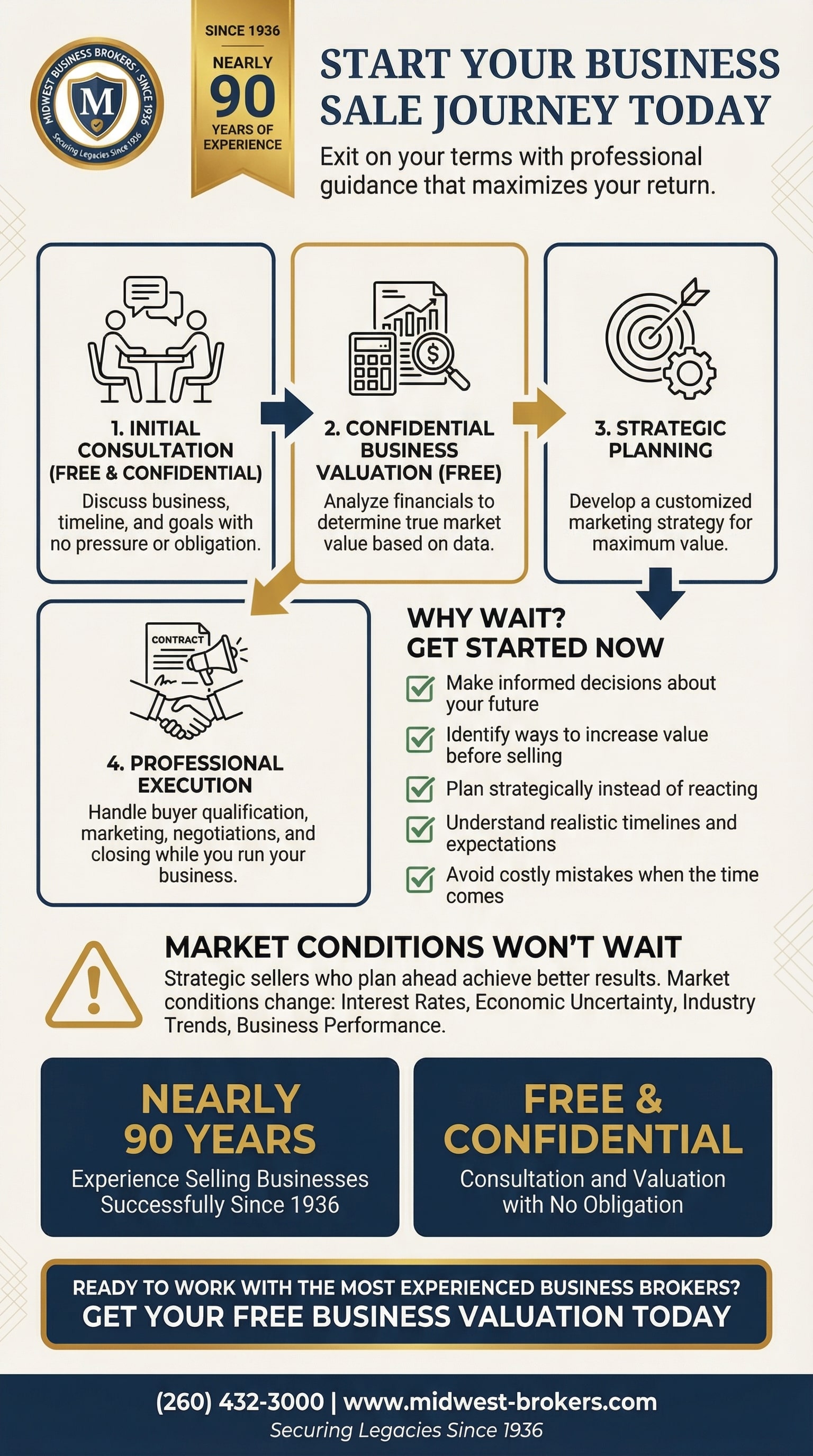
Understanding Market Variables
Timing and proceeds vary with the business, available records, buyer interest, financing, due diligence, transaction structure, costs, and other circumstances. Use an initial conversation to identify questions and dependencies rather than rely on a fixed schedule or predicted result.
- Interest rates affect buyer financing capacity
- Economic uncertainty impacts buyer confidence
- Industry trends shift competitive dynamics
- Your business's performance fluctuates
Early preparation provides more time to organize records and evaluate options.
Use the preliminary calculator or schedule an initial consultation to discuss your situation, even if you are years away from selling.
Ready to Discuss Your Business Sale?
 English
 Español de México
 简体中文